Friday, February 24, 2012

Mirrors!!!!


Mirrors have been fascination objects to the world for a long period of time. They are used in many ways, and they are commonly found in homes. In the bathrooms, bed rooms and special locations, you will find the glass. They can reveal truths that you may or may not want to see. For Scientists, the simultaneous simplicity and complexity of mirrors make them powerful tools for exploring questions about perception and cognition in humans and other neuronally gifted species, and how the brain interprets and acts upon the great tides of sensory information from the external world. Doctors are using mirrors to study how the brain decides what is self and what is other, how it judges distances and trajectories of objects, and how it reconstructs the richly three-dimensional quality of the outside world from what is essentially a two-dimensional snapshot taken by the retina’s flat sheet of receptor cells. Mirrors are also used in medicine to create reflected images of patients’ limbs or other body parts and thus trick the brain into healing itself. The object ‘inside’ the mirror is virtual, but as far as our eyes are concerned it exists just like any other object. Physical self-reflection in the mirror, encourages philosophical self-reflection, you cannot know or appreciate others until you know yourself.
“Although we see ourselves in the mirror every day, we don’t look exactly the same every time,” explained Dr. Epley. There is the scruffy-morning you, the assembled-for-work you, the dressed-for-an-elegant-dinner you. “Which image is you?” Research shows that people, on average, resolve that ambiguity in their favor, forming a representation of their image that is more attractive than they actually are.
The point is that no matter how close or far we are from it, the mirror is always halfway between our physical selves and our projected selves in the virtual world inside the mirror, and so the captured image in the mirror is half our true size.


Friday, February 17, 2012

Batteries!!!


Do you ever wonder how double and triple AA batteries power you calculator, cellphone, DVD player and remotes? Most people like to these the things mentioned about working, but focus less on how batteries to what they do. First lets’ take a look at their history; most historians date the start of the development of batteries from the late eighteenth century. In 1938 Wilhelm Konig discovered a 5 inch pottery jar containing a copper cylinder that encased an iron rod in Iraq, he decide that it was a battery. One may think of a battery as a small power plant that converts a chemical reaction into electrical energy. Cadmium, lead, zinc, manganese, nickel, silver, mercury, and lithium. When disposed of in an unlined landfill, a battery can leach its toxic constituents and contaminate groundwater, resulting in possible exposure to humans. Batteries have three parts, an anode (-), a cathode (+), and the electrolyte. Both the negative and positive ends are hooked up to an electric circuit.
Oxidation and reduction reactions make a battery work. Oxidation and reduction reaction are electron transfer reactions; both of them must happen in order for a battery to work. One generates electrons at one electrode and the other uses them up at the other electrode. Oxidation is when electrons are transferred from a substance to oxygen or some other compound. Reduction is when a chemical reactant accepts electrons. It ends up with more electrons than it started with. The reaction at the anode releases electrons, and leaves behind positively charged ions. The cathode soaks up electrons.
If we did not have batteries, there would be wire connections everywhere because almost everything we use today has a battery. Cars, laptops, cell phones, and televisions are made to work by power and energy. Therefore we should be thankful of batteries because without them, we would not be able to control things that way we do.


Thursday, February 9, 2012

Immune System and Cancer


The immune system relies on an intricate network of alarm bells, targets and safety brakes to determine when and what to attack. The new results suggest that scientists may now be able to combine DNA sequencing data with their knowledge of the triggers and targets that set off immune alarms to more precisely develop vaccines and other immunotherapies for cancer. Scientists have long maintained that the immune system can recognize cancer as a threat either on its own or with the help of vaccines or other immunotherapeutic treatments, which help alert the immune system to the danger posed by cancers. Once the cancer is recognized, the immune system should develop the capacity to attack growing cancer cells until either the tumor is eradicated or the immune system's resources are exhausted. Cancer immunoediting, suggests that some of the mutations in tumor cells are very easy for the immune system to recognize as a threat. If the immune system detects these mutations in cancer cells, it attacks until they are destroyed. At that point, the cancer may be eliminated. But it's also possible that the cancer can be "edited" by the immune system, resulting in the removal of all the cells containing the critical easily recognized mutations. The remaining tumor cells can continue to grow or enter into a period of dormancy where they are not destroyed but are held in check by the immune system. By comparing genetic data from cancer cells and normal cells, scientists identified 3,743 mutations in the genes of the tumor cells.
Our best choice and suggestion from researchers is that we create a vaccine that can help the immune system to recognize and attach some of the mutated proteins in a cancer.


Tech Life

Technology is saving our live in ways we do not know about. If it is not doing so yet, it will soon be. I am not 100% sure that most people agree with me on this, but almost half of the people who think like me would agree with my statement. They would agree because it is not only true but because it has also spread from youths to adults including those with high respected professions. Technology life has taken control and is well ahead of anyone’s understanding. Although it creates may negative views about and for teenagers who use it inappropriately, it has become a very useful tool to adults whose lives are in need of help with short cuts to their everyday goals. For example: Thomas Lee, an orthopedic surgeon’s business cards are stamped with the link to his face book page. He actively tweets, checks in regularly on foursquare, and maintains a Google plus profile. And he does it for his patients. According to him, “it’s an electronic way of extending the conversation” and "It creates a vibrant sense of community and a wonderful back and forth dialogue." Social media makes it easier than ever for patients and physicians to connect outside the exam room. More than 1,300 doctors have already registered with TwitterDoctors.net, a database of physicians who tweet. "These are powerful, tremendously influential tools," says internist Kevin Pho of Nashua, N.H., a popular medical blogger who engages with his patients via Facebook and Twitter. "Doctors should be taking advantage of the opportunity."
I am happy to know that I can chat with my doctor on Facebook when he gets and account. Because tech life is becoming increasing important, we should all consider having at least one tech life, one that will enable us to reach our goals at the end of the day.

Wednesday, January 25, 2012

More Mercury, More Danger

The strict new federal standards limiting pollution from power plants are meant to safeguard human health. But they should have an important side benefit according to a study released on Tuesday: protection a broad array of wildlife that has been harmed by mercury emissions. Songbird and bats suffer from some of the same types of neurological disorders from mercury as humans especially children. Methyl mercury, the most toxic form of heavy metal was found to be at minimal risk. There have been studies to learn the amount of pollution and heavy metals in the atmosphere and the new studies have found dangerously high levels of mercury in several Northeastern bird species, including rusty blackbirds, saltmarsh sparrow and wood thrushes. In some older studies, zebra finches lost the ability to hit high notes in mating songs when mercury levels raised affecting reproduction.“We’re seeing many other species in a much larger landscape of harm from mercury,” said the principal author, David C. Evers, who is the institute’s executive director. He called the Environmental Protection Agency’s new mercury standards, adopted last month and scheduled to take effect over the next four years, “an excellent step forward in reducing and minimizing the impact on ecosystems and improving ecological health, and therefore our own health.”  
Mercury, which occurs naturally in the earth, is released into the air when coal is burned in power plants. The gaseous mercury can drift hundreds of miles before settling back to earth, sometimes along with rain. The mercury can also be absorbed by tree leaves; when they fall to the ground, they are swarmed by bacteria and other organisms that convert the mercury to its organic form. The organic form, methylmercury, is a neurotoxin that can enter the food chain. Small insects, worms and snails that feed on forest litter absorb the mercury. In turn, they are eaten by birds and other small animals, and so on through the food chain. Songbirds with blood mercury levels of just 0.7 parts per million generally showed a 10 percent reduction in the rate at which eggs successfully hatched. As mercury increases, reproduction decreases. At mercury levels of greater than 1.7 parts per million, the ability of eggs to hatch is reduced by more than 30 percent, according to the study.

Sunday, January 22, 2012

Speed Limit for Birds


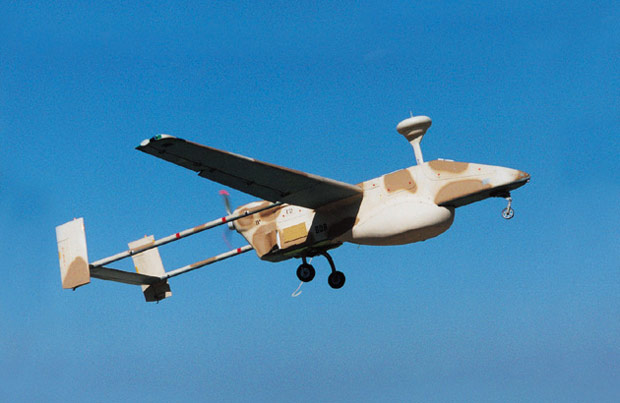
The northern goshawk is one of nature's diehard thrill-seekers. The formidable raptor preys on birds and small mammals, speeding through tree canopies and underbrush to catch its quarry. With reflexes that rival a fighter pilot's, the goshawk zips through a forest at high speeds, constantly adjusting its flight path to keep from colliding with trees and other obstacles. Researchers found that, given a certain density of obstacles, there exists a speed below which a bird and any other flying object has a fair chance of flying collision-free. Any faster, a bird or aircraft is sure to crash into something, no matter how much information it has about its environment. Most UAVs (unmanned aerial vehicles) today fly at relatively slow speeds, particularly if navigating around obstacles. That's mainly by design: Engineers program a drone to fly just fast enough to be able to stop within the field of view of its sensors.
If the goshawk flew as far as it can see, it would not fly as first as it does. It would be like us we can only see up to five meters, we can only go up to a speed that allows us to stop within five meters, which is not very fast. Instead, the goshawk likely gauges the density of trees, and speeds past obstacles, knowing that, given a certain forest density, it can always find an opening through the trees. The team's work establishes a theoretical speed limit for any given obstacle-filled environment. For UAVs, this means that no matter how good robots get at sensing and reacting to their environments, there will always be a maximum speed they will need to observe to ensure survival. Emilio Frazzoli, an associate professor of aeronautics and astronautics at MIT wants to research this same speed limit for humans.


Thursday, January 12, 2012

More Planets than Stars in Galaxy

The more astronomers look for other worlds, the more they find. They think planets easily outnumber stars in our galaxy and they're even finding them in the strangest of places. "We're awash in planets where 17 years ago we weren't even sure there were planets" outside our solar system, said Kaltenegger. Astronomers are finding more planets using many different techiniques and telescopes in space and the ground. NASA's new kepler planet-hunting telescope in space is discovering exoplanets that are in a zone friendly to life and detecting planets as small as Earth or even smaller. A study in Nature this week states that the Milky Way averages at least 1.6 large planets per star. In order to find the planets, astronomers look for increases in brightness of distant stars that indicate planets between Earth and the pulsating star; a technique used by South American, African and Australian telescopes. That technique usually finds only bigger planets and is good at finding those further away from their stars, which means that there are probably more planets than those already discovered. Kepler together with another ground-based telescope technique are finding planets closer to their stars. Together, the number of worlds in our galaxy is probably much closer to two or more planets per star. It is also known that Kepler also found three rocky planets tinier than Earth and they are circling a dwarf star, which is only a bit bigger than Jupiter. They are so close to their small star that they are too hot for life. Scientists think that because it is too hard to see their sizes, there are plenty of them up there. “It's not just the number or size of planets, but where they are found. Scientists once thought systems with two stars were just too chaotic to have planets nearby. But so far, astronomers have found three different systems where planets have two suns.”